


If you’ve built a budget for an observational study using the framework in my previous article, you already know these are among the simpler builds you’ll encounter. Lean SOEs, no IP administration, no PK draws, a handful of standard line items. You can draft one in a fraction of the time an interventional protocol takes.
But you might have wondered why these studies exist at all. Why would a sponsor run a study where they’re not actually testing anything? Why do some observational protocols enroll 200 patients and others enroll 200,000? And why does a drug that just completed a multi-thousand-patient Phase III program need yet more data collected on it?
This article answers those questions. It won’t change how you build the budget but it will give you the context to understand what you’re looking at when one of these lands on your desk.
The Core Distinction: Intervening vs. Watching
In an interventional trial, the sponsor introduces something – a drug, a device, a procedure – and measures what happens as a result. The study itself changes how the patient is treated.
In an observational study, patients receive treatment as they normally would through routine clinical care, and the study simply records what happens.
This distinction has direct consequences on the clinical trial budget. No investigational product being administered under controlled conditions means no IP-related line items. No deviation from routine care means fewer procedures, shorter visits, and a much thinner SOE. The simplicity of the build reflects the scientific question being asked.
Why Run an Observational Study at All?
The randomized controlled trial (RCT) is the gold standard for establishing whether a treatment works, however, it is not always the right tool, and it’s not always feasible. Observational studies exist because there are important questions that RCTs either cannot answer or answer poorly.
The real-world gap
RCTs are built on control – they use strict inclusion and exclusion criteria, standardized treatment protocols, frequent monitoring visits, and patient populations that are often more homogeneous and healthier than the people who will actually use the drug once it is approved.
A drug may perform exceptionally well in a Phase III population that excluded patients over 70, those with renal impairment, and anyone on more than three concomitant medications. However, those exact patients might be the ones who end up reaching for it post-approval. Observational studies are how sponsors, regulators, and clinicians understand what actually happens when a treatment meets real patients in routine clinical practice.
Post-approval obligations
When a drug receives conditional/accelerated approval, meaning it was approved on the basis of promising but not yet complete evidence, regulators often require the sponsor to continue collecting data as a condition of maintaining that approval. These post-authorization safety studies and post-authorization efficacy studies are typically observational. The drug has already been proven safe and effective under controlled conditions and is on the market. The question now is how it performs across the broader population over time.
Cost and speed
Most observational studies are substantially cheaper to run than comparable RCTs. In many cases, particularly retrospective or registry-based designs, data collection can be relatively rapid. For a sponsor who has already spent hundreds of millions on the clinical development program, an observational study is a modest investment that can produce meaningful evidence for market access negotiations and prescribing decisions.
Why Patient Numbers Don’t Work the Way You’d Expect
In an interventional trial, patient volume is constrained – strict eligibility criteria, active procedures that require specialized sites, randomization and monitoring all limit how many patients you can enroll and how quickly. A Phase III oncology trial might recruit a few hundred to a few thousand patients across many sites in multiple countries over several years.
Observational studies can draw from a much broader pool, sometimes tens of thousands of patients across dozens of countries. Often, the eligibility bar is simply “diagnosed with this condition and receiving treatment for it.” No randomization, no placebo arm, no triplicate ECG at every visit. Just enrollment, consent, and data collection.
It’s also worth knowing that larger doesn’t mean more statistically rigorous. Observational data has consistently struggled to replicate RCT results, with discrepancies attributed to differences in study populations, data quality, and sources of bias that can’t be controlled for the way they can in a randomized design. When RCT and real-world results diverge, researchers generally give greater weight to the randomized trial but note that the two study types are complementary, not competing. A blockbuster drug will routinely complete a massive Phase III program and still generate decades of observational research.
Types of Observational Studies
Prospective cohort studies enroll patients going forward in time and follow them as they receive their normal treatment. The researcher defines what data will be collected before the study starts. This is the most common type you’ll encounter in your daily work. Patients are enrolled at a site, followed for a defined period, and data is captured at each visit. These studies produce a traditional budget structure: screening visit, follow-up visits, EDC at each timepoint, PI and SC fees throughout.
Retrospective studies look backwards, using data that already exists like medical records, electronic health records, claims databases. The data collection has already happened; the study is about extracting and analyzing it. These studies typically don’t involve sites in the traditional sense and don’t generate a traditional clinical trial budget. If you’re handed one, your scope is usually minimal.
Disease registries are long-term databases collecting standardized data on patients with a specific condition. A registry might run for ten or twenty years across hundreds of sites, continuously enrolling newly diagnosed patients. They’re often sponsored by multiple organizations – companies, academic institutions, patient advocacy groups, and the data becomes a shared resource for the field. Budget-wise, these tend to be straightforward per-patient, per-visit builds, but the sheer duration and enrollment scale can make contract management complex.
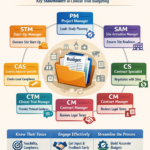
Managing these complex, long-term registry agreements requires alignment across multiple internal teams. Understanding how your role fits into the broader team structure can prevent bottlenecks, which I break down in the IGA Stakeholder Map.
What This Looks Like in Practice: Semaglutide
Semaglutide (Ozempic/Wegovy/Rybelsus) is a useful illustration because the scale of its clinical program is well documented and the contrast between its interventional and observational footprint is stark.
The SUSTAIN program (Novo Nordisk’s Phase III development initiative for semaglutide) evaluated the drug in over 7,000 patients across six global Phase IIIa trials, and in nearly 3,000 patients across four Phase IIIb trials. These were rigorous, controlled, interventional studies with full monitoring, active comparators, and comprehensive endpoint packages.
Following approval, a wave of observational research followed. By August 2024, researchers had identified 19 published real-world studies with tens of thousands of participants evaluating semaglutide in routine clinical practice. The studies varied considerably in design, size, and geography, but all shared the same basic structure: patients already on oral semaglutide as part of their normal diabetes care, with researchers recording what happened.
The One Thing Worth Remembering
Observational studies exist because controlled trials, for all their rigor, can only answer the questions they were designed to answer. Everything else – how the drug performs in elderly patients, in populations with comorbidities, over ten years of real-world use – requires watching rather than intervening.
When one of these arrives in your inbox, the build is usually straightforward. But knowing why the study exists, what type it is, and what the sponsor is actually trying to learn will make you faster at scoping it and more confident in your assumptions. That context is what separates a builder who follows a checklist from one who actually understands the work.
Find out who I am and what I am fighting for.
If you agree, disagree, or think this is nonsense, email contact@clinicalbudgets.com
If you’d like me to cover a specific topic, you can suggest it here.