
Category Budgeting Foundations

Why Sponsors Run Observational Studies (And What That Means)

What is the point of Observational Studies

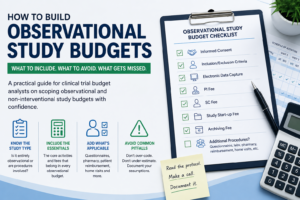
If you've built an observational study budget, you know it's one of the simpler builds you'll encounter - lean SOEs, no IP administration, no PK draws. But why do these studies exist at all, and why does a drug that just finished a multi-thousand-patient Phase III program need more data collected on it? This article breaks down the logic behind observational research, the different study types you'll encounter, and what it actually means for the work on your desk.

Read MoreWhy Sponsors Run Observational Studies (And What That Means)

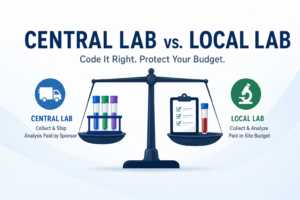
Central Lab vs. Local Lab: How It Changes Your Clinical Trial Budget

Clinical Trial Budgets - Local vs Central Lab

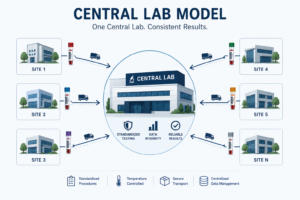
Central vs. local lab assumptions are one of the fastest ways to either overbuild or underbuild a clinical trial budget. This article breaks down how to code each setup correctly, how mixed lab models should be handled, and which assumptions must be documented to avoid costly rework, sponsor pushback, and site payment issues.

Read MoreCentral Lab vs. Local Lab: How It Changes Your Clinical Trial Budget

Navigating the UK iCT: A Guide to NHS Clinical Trial Budgeting (with Key Differences vs France)

UK vs France Clinical Budgets

Understanding UK clinical trial budgets starts with the time-based costing model. Unlike fixed-fee systems, each procedure is broken down by staff role and time allocation, often resulting in multiple line items for a single activity. Combined with mandatory uplifts such as indirect costs, capacity building, and Market Forces Factor (MFF), this structure can significantly increase the true cost per patient compared to initial estimates.

Read MoreNavigating the UK iCT: A Guide to NHS Clinical Trial Budgeting (with Key Differences vs France)