


This article is part 1 of a 2-part series on start-up costs in clinical trials. It deals with what set-up fees are, what belongs here and what doesn’t.
Part 2 focuses on how to evaluate, challenge, negotiate, and protect the CRO or Sponsor from compliance risks.
I’ve been in this business for years and there is one thing that I always tell colleagues to be cognizant of – site fees. No matter how standardised the industry claims to be, sites always seem to have their own interpretation of what they should be compensated for outside of the procedural items. To make matters worse, tons of sites use their own naming convention that does not always make it clear what they want the fees to cover which can make CTA budget negotiations a slog.
This is how site fees and Start-up costs in particular become a black box and the goal of this article is to break it open. Start-up costs are not random and should not be considered subjective – they are collections of specific activities with specific purposes, each of which can be identified, validated, and negotiated on its own terms. Understanding the structure gives you the ability to challenge unreasonable and vague lines.
What a Start-up Cost Actually Is
Before anything else, let’s build the foundation:
Start-up costs are pre-study activities required to make a site operationally ready to conduct a clinical trial. They exist because trial activation involves significant preparatory work (regulatory submissions, system setup, contract finalization, staff training) that happens before a single patient is enrolled and before any per-patient payment logic applies.
A fee should generally meet three tests:
1. Timing: Does the activity occur before site activation?
2. Purpose: Is the activity required to make the site operationally ready for the study?
3. Recurrence: Is the fee a one-time cost, rather than an ongoing or recurring activity?
Start-up is about prep work and readiness, not about ongoing operations. A cost that recurs across the study lifecycle or is paid after the study is already ongoing, doesn’t belong in Start-up. Think of your amendment or your close-out fees – sites may want to bundle them up as part of the study set up but they clearly do not belong there.
What Counts as a Start-up Cost
I would argue that coming up with a comprehensive list of start-up fees is impossible. As noted, sites may call the same activity by different names, or bundle activities differently across studies. In that sense, the most useful approach is to understand the major buckets that set-up fees fall into, and what each one is actually compensating. That way you will be able to wrap your head around whatever you may encounter in your daily work.
This same principle applies to pre-award budget development, where incomplete protocol information often requires assumptions about which costs will actually be incurred. For more on how assumptions affect clinical trial budgets, see my guide to pre-award budgets, assumptions, and CPT codes.
Administrative Study Start-Up
A one-time fee to compensate the site for general administrative activities required to initiate the study. This includes (but not limited to) internal site preparation, study coordination, communication with the sponsor and CRO, document organization, document printing and activation-related administrative tasks not otherwise captured under a specific Start-up line item.
This is the most frequently abused line. “Administrative start-up” is a legitimate category for real coordination work but it’s also the catch-all that sites use when they want to add a number without specifying what it covers. If this line seems high or outside fair market value ask can the site for more information on this fee – this will help you understand what you are looking at and you can push back if duplicative fees emerge.
This is also one of the reasons start-up costs are a common source of budget QC issues: vague descriptions and overlapping line items can be difficult to identify unless the underlying activity is clearly defined. For more on common budget QC failures, see Why Clinical Trial Budgets Fail QC.
Initial IRB/IEC Submission Fee (Document Preparation Fee)
A fee to compensate the site for preparing, compiling, and submitting the initial ethics committee application package. This includes completion of submission forms, formatting and review of required documents, and coordination of the initial submission process.
The actual IRB/IEC fee is a pass-through and sits separately; what this line covers is the site staff time to prepare the submission. The two are distinct and should appear separately in the budget.
Investigator Fee (Feasibility and Protocol Review)
A fee to compensate the Principal Investigator for scientific and clinical activities performed during study initiation, including review of study feasibility, assessment of the protocol’s suitability for the site and patient population, and investigator input regarding study requirements.
This is one of the lines that gets contested because it’s genuinely the PI’s time rather than administrative work and PI time is expensive. The question is whether the protocol complexity and study setup genuinely required the level of engagement being billed. A first-in-class oncology study with novel endpoints will generate real PI review time. A Phase IV observational study in a familiar indication probably won’t justify the same amount. If you want to challenge this line, you can take the PI fee from the cost per patient grid and see how it compares to the amount of effort anticipated.
Budget Preparation, Negotiation and Contract Finalization
A fee to compensate the site for financial and contractual activities required to finalize the clinical trial agreement. This includes review of the proposed budget, negotiation of payment terms, legal and administrative review, internal approval routing, and execution of contract documents.
Large academic sites in particular have dedicated legal and finance teams who review every line of a CTA, and that time has a legitimate cost. The line is justified in principle; the amount is what needs scrutiny.
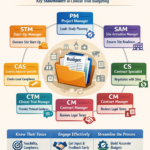
The site-side process is only one part of the wider cross-functional workflow involved in clinical trial budgeting. For an overview of the different stakeholders involved in budget development, contract negotiation, and study start-up, see our IGA Stakeholder Map.
Site Initiation Visit (SIV) Preparation Fee
A fee covering site preparation activities for the sponsor or CRO Site Initiation Visit, including review of study materials, staff coordination, completion of pre-SIV action items, and readiness for study activation.
SIV prep is distinct from the SIV itself – the visit is usually organized and funded separately as a sponsor operational cost. What this line covers is the site’s own preparation time – reading materials, completing pre-visit checklists, getting staff ready, resolving pre-visit queries.
Electronic Data Capture (EDC) Training / Study Portal / IT Set-Up
A fee for activities required to establish and have access to study-specific electronic systems prior to study activation. This includes creation and configuration of user accounts, completion of EDC and study portal training, IT and security questionnaires, system access requests, and other technology setup activities required for site participation.
Clinical trials have become increasingly technology-heavy with multiple EDC systems, ePRO platforms, CTMS access, IVRS/IWRS, central imaging portals. For this reason, allocating funds in an “IT bucket” is justified.
A US-Specific Note: Third-Party Coverage Analysis
It is not uncommon for US-based sites to ask for a Third-Party Coverage Analysis or Medicare Coverage Analysis fee. This covers the work required to ensure the study complies with the Medicare Clinical Trial Policy before the site can begin billing Medicare for routine care costs associated with trial participation. The analysis involves reviewing the protocol, developing billing grids in the site’s clinical trial management system, and assigning coverage determinations to each procedure. The underlying coverage analysis and billing-grid work may be necessary to support compliant billing decisions for applicable studies, and the associated staff effort can represent a legitimate start-up cost.
Training Site Personnel Fee
A fee to compensate the site for training study personnel on trial-specific procedures and operational requirements prior to study initiation. This includes training on study workflows, protocol-related procedures, eCRF completion requirements, data entry expectations, safety reporting processes, and other operational aspects required for proper study conduct.
This is the cost of getting site staff ready to run the protocol. It’s legitimate and important but training time should scale with protocol complexity. A straightforward subcutaneous injection study for a well-trained site team doesn’t justify the same training cost as a complex multi-arm oncology protocol with novel endpoints, mandatory biopsy procedures, and a study-specific IVRS.
Start-up Costs at Large Academic Medical Centers
At major academic institutions, start-up activities are not handled by a single site team. Each relevant department (labs, pharmacy, radiology, nuclear medicine) has to review the protocol independently, prepare their own processes, and train their own staff before the study can start. That means a start-up section for an academic site can legitimately contain a pharmacy setup fee, a laboratory setup fee, a radiology setup fee, and a nuclear medicine setup fee as separate line items, each covering distinct departmental work.
This isn’t double-dipping. The pharmacy team and the radiology team are doing different things: the pharmacy is reviewing dispensing requirements, setting up drug accountability systems, and preparing careplans; radiology is reviewing imaging protocols, preparing submission statements, and scheduling equipment calibration.
Many academic sites also apply tiered fee structures within these departmental categories – higher fees for complex protocols and therapeutic areas, lower fees for straightforward ones. Think about if your study’s protocol complexity genuinely matches the tier being claimed.
What Doesn’t Belong in Start-up
Annual maintenance fees. The clearest illustration of the recurring-cost problem is the annual maintenance fee – something many sites include in their start-up documentation but which is definitionally not a start-up cost. An annual regulatory maintenance fee, an annual operational maintenance fee, or a per-year document management fee all share the same characteristic: they recur after the study is operational, which means they belong in an ongoing fee category, not in a one-time start-up section.
Recruitment-related costs. Advertising, pre-screening activities, patient identification efforts – these are recruitment costs that belong in a separate category, not in Start-up, because they happen after the site is already initiated.
Amendment preparation fees. A protocol amendment isn’t a Start-up activity – it is a mid-study occurrence. Labeling it as a Start-up-adjacent cost is a misclassification regardless of when it happens to arise.
NB: In-start-up amendments
One nuance worth clarifying here: the rule about amendment fees not belonging in start-up applies to amendments that occur after a site has activated and the study is running. There is a specific edge case called an in-start-up amendment – a protocol change that arrives after the set-up process has begun but before the site has activated. If a site has already completed partial regulatory and operational start-up work when a protocol amendment forces rework of those completed activities, the additional effort is a legitimate cost. It sits in a grey zone between start-up and amendment, and it should be flagged explicitly in the budget as an in-start-up amendment rather than bundled silently into either category.
For a structured way to flag and document these on a live budget, see my amendment checklist.
Coordinator hiring or onboarding costs. A site bringing on a new staff member to run the trial is a site workforce decision, not a study Start-up cost. The sponsor is paying for the coordinator’s study-related work through per-visit fees and SC labor costs – not for the recruitment and HR costs of finding that person.
Vague abbreviations or invented cost categories. If a Start-up section contains an acronym you don’t recognize or a fee category that doesn’t correspond to any identifiable activity, ask for clarification before accepting it. This is not an area where guessing is appropriate – if a fee can’t be explained, it shouldn’t be approved without requesting further information.
The Bottom Line
Think of the three principles we started with – Timing, Purpose and Recurrence. A line needs to cover all three in order to be considered a set-up fee. Addiitonally, start-up costs should allow you to answer three questions for every line item:
- What specific activity does this fee compensate?
- Is the fee related to the site’s activation?
- Could the activity already be covered by another fee?
If you cannot answer those questions, the fee is not necessarily unreasonable but it is not yet sufficiently defined to approve confidently. This is what the second part of these series will cover.
Find out who I am and what I am fighting for.
If you agree, disagree, or think this is nonsense, email contact@clinicalbudgets.com
If you’d like me to cover a specific topic, you can suggest it here.